Showing posts with label LCF. Show all posts

Saturday, February 12, 2011

LCF MA Graduate Showcase: Qunying Huang


Despite our eyes being fixed on the goings on in New York, we just had to continue our LCF MA Graduate showcase series. Recent posts have celebrated the cream of the latest crop of MA graduates and have seen us speak with each of our favourite students to learn more about their collections and their experiences at LCF. Here, we turn our attention to the collection of Qunying Huang.

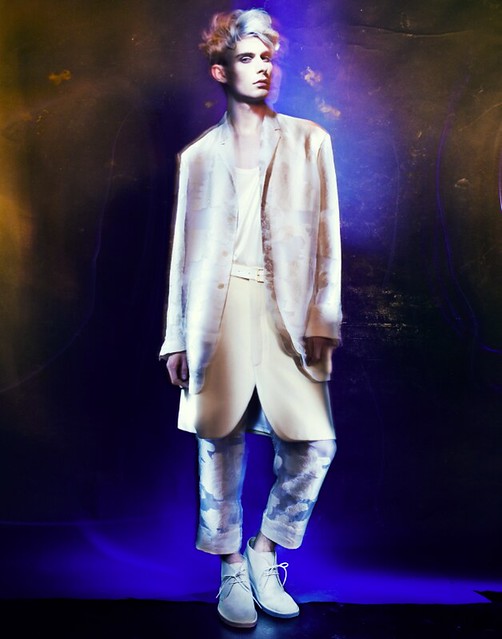
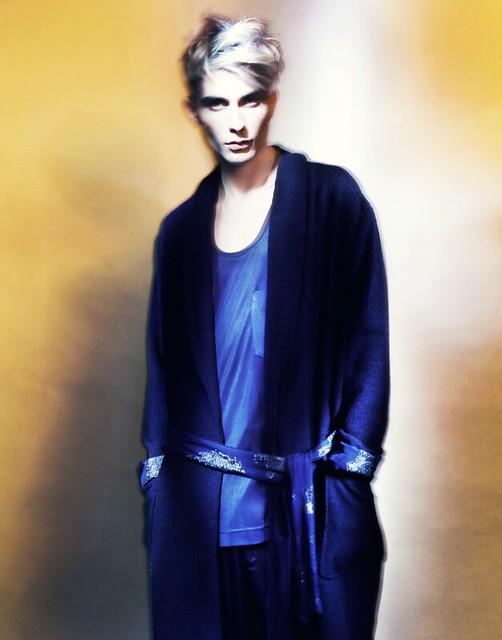
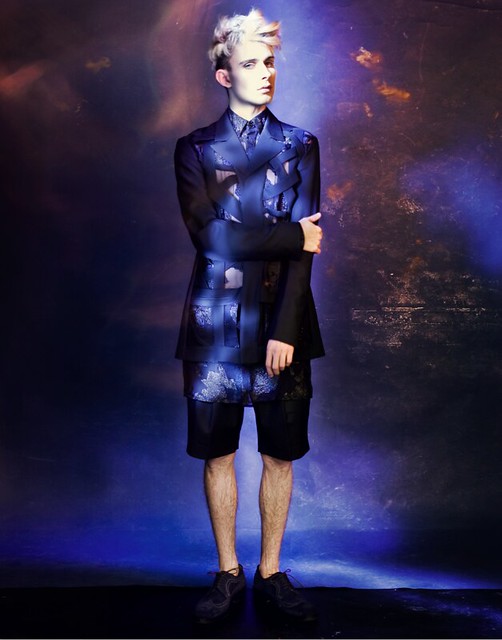
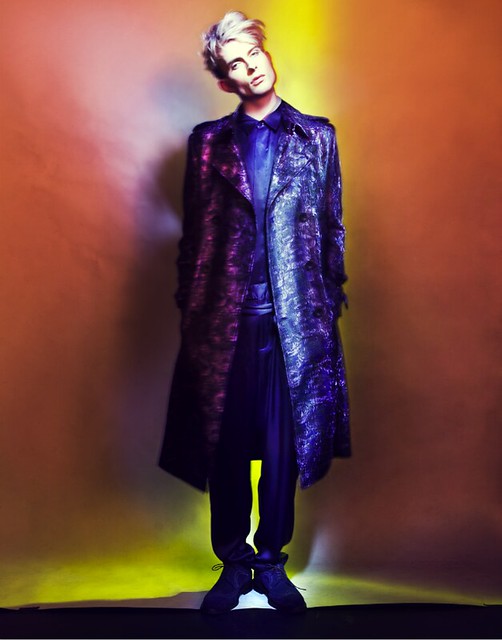
Entitled Bound & Boundless, Huang's collection is focused on exploring and expressing different personal boundaries and Chinese philoshophy. Through the stunning combination of jacquard fabrics with flat fabrics, the design talent uses a design method that refers itself to modern art and traditional tailoring to express the four different personal boundaries as well as the feeling of protection and vulnerability of masculinity. Here we talk to the design talent to hear about her experiences at LCF, learn more about the processes and techniques used within the collections and reveal her hopes for the future...
----------

SS: Firstly, congratulations on more than playing your part in a dazzling, menswear rich MA show. How did it feel seeing your finished designs on the catwalk?
Qunying Huang: Seeing our MA show at the V&A was a monumental moment for all of us. I was enjoying the moment. We have worked a long time for it, this was our time and every one was watching us.

SS: Describe the moment you realized you wanted to be a menswear designer?
Qunying Huang: This idea only came from when I was in my BA Course, I was in China at that moment. In the third year we had a menswear course, and I found that menswear is more about subtle details and tailoring, which is quite different from womenswear. And I love to make some totally different things. This is a challenge to me.
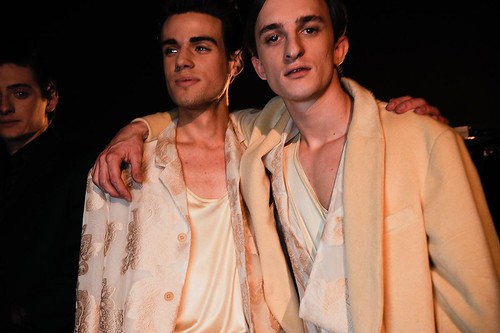
Backstage at the MA show. Photography by Morgan O'Donovan

SS: What attracted you to the LCF MA course in particular? What was the best thing about your course? And the worst?
Qunying Huang: We are free to explore anything we want to explore, and we have the opportunity to push things.

The best thing of my course is we can turn our original ideas in to real garments. It is very interesting to see our own design on models. In the process of making the collection, I have improved a lot in my project management, time management, tailoring skills and so on.

The worst thing is when we want to use some special machines, we need to travel a long way.

SS: Now on to your collection itself. Bound & Boundless experiments with fabric and tailoring techniques in a stunning way. Can you talk us through the inspiration for the collection?
Qunying Huang: I got the inspiration from the personal boundaries and Chinese philosophy “in the world, all things are born of being, being is born of non-being. Laozi”. There are four kinds of personal boundaries, they are soft, sponge, rigid, flexible personal boundaries. People will feel weak and vulnerable when they have a soft personal boundary, which has been expressed by jacquard and soft fabrics. People with rigid personal boundary would feel isolated and protected. For the Chinese philosophy, I tried to express the non-being, that space is what is needed. For example, look at a house, what we need is the space inside it. If the house does not have space inside, it offers no benefit to us at all. I focused on the combination of different fabrics and the proportion of every outfit.
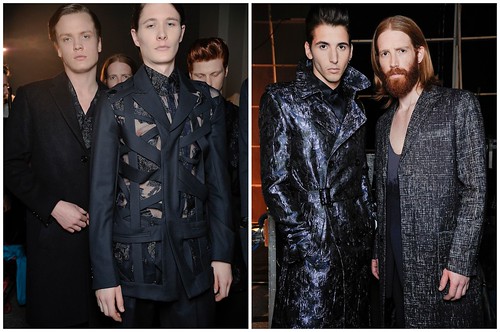

Backstage at the MA show. Photography by Morgan O'Donovan

SS: The main focus of the collection has been on the silk jacquard outfits and the Tanaka technique. Could you talk us through these techniques?
Qunying Huang: Silk jacquard fabrics are really difficult to make for menswear and I wanted to express masculinity through very soft fabrics. The jacquard jacket is not traditional tailoring, I use some organza between jacquard and silk lining to support the front body and lapel. Jersey and wool are combined by the Tanaka technique. Wool has to be much heavier than the jersey. I put wool at the bottom of the jacket, so we can see the wool a slightly drop when the model wear it, it was subtle details.

SS: How would you describe the collection in your own words?
Qunying Huang: Soft but masculine.

SS: I know this is difficult question to answer but have you got a favourite, anything that you were most proud of?
Qunying Huang: The most proud of thing is that I can always get inspiration from our life, as well as I can do what I love and I did it well. When the people told me that they like my collection, I was proud of myself.


Backstage at the MA show. Photography by Morgan O'Donovan

SS: The menswear on show this year was so strong. I was amazed to see that fifteen of the twenty two graduates selected studied menswear. Aside from your own, which was your favorite of the graduate collections?
Qunying Huang: I love Mio’s collection, she used amazing fabrics and she is so good at tailoring. She worked very hard and used a very different way in V&A show to present her collection.

SS: What advice would you give a prospective menswear fashion student?
Qunying Huang: Don't be afraid to use some unusual fabrics and do whatever you like.

SS: Finally, what would you like to achieve in 2011 and beyond?
Qunying Huang: I will stay in London and continue developing beautiful menswear and womenswear to express myself. I am looking for a job at the moment, I want to get more work experience.
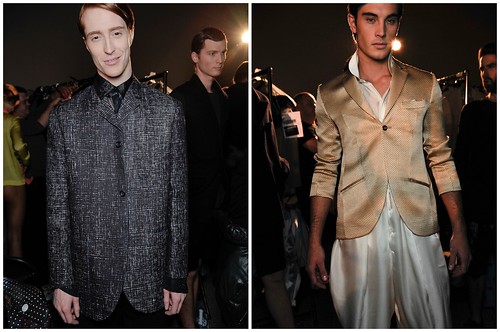

Backstage at the MA show. Photography by Morgan O'Donovan
----------
 
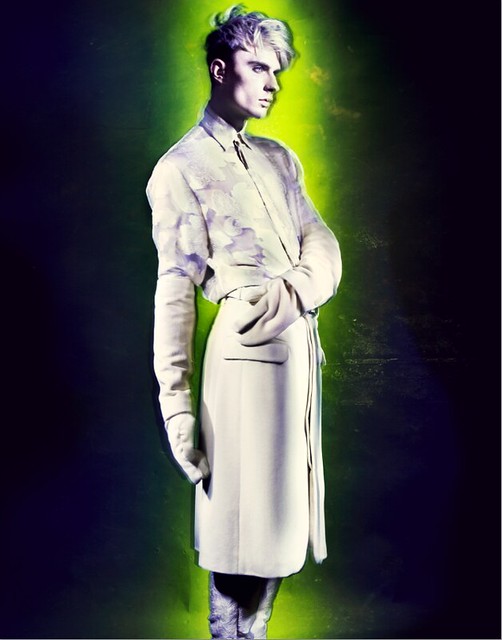
As she explored various personal boundaries, Qunying Huang has created collection a soft yet maculine collection through the use of uncommong tailoring techniques and light fabrications. I for one, am looking forward to watching her talent develop. I'll leave you with her eye catching look book. Shot by Nikolay Biryukov, the look book captures the essence of the collection perfectly...

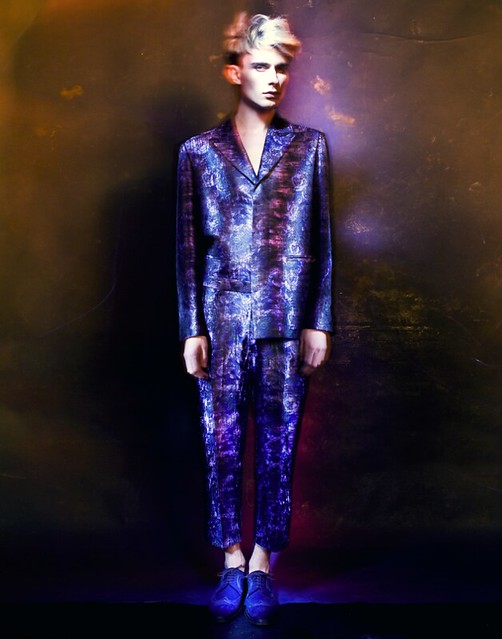
Photography by Nikolay Biryukov, hair and makeup by Joanne Lui with Florian Pessenteiner modelling.
Thursday, February 10, 2011

LCF MA Graduate Showcase: Michelle Quick


To celebrate the cream of the incoming crop of LCF MA graduates we have been speaking to each of our favourite students to learn more about their collections and their experiences at LCF. We kicked off this year's series with prize winning Matteo Molinari before turning our attentions to the wood craft of Yan Liang. Now it is time to highlight a hugely talented footwear design graduate that left this budding shoeist breathless.


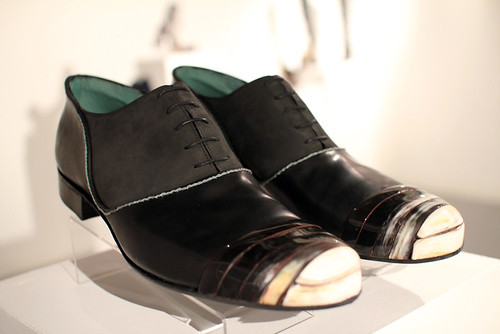
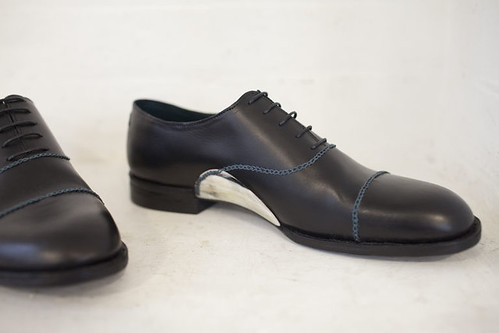
Michelle Quick's graduation collection challenges traditional gender roles within craft practice by combining inherently feminine crafts with men's bespoke footwear. I was taken by her ability at combining various shoe age old making techniques with unusual materials. Entirely made by hand, the collection showcases intricate stitching, various welting techniques and utilizes cow horn as a structural and decorative element to stunning effect. Here we talk to the design talent to hear about her experiences at LCF, learn more about the processes and techniques used within the collections and reveal her hopes for the future...

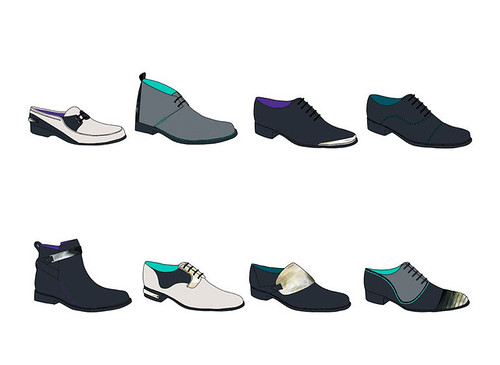
The collection in Illustator

SS: Congratulations on more than playing your part in an exciting MA show (in terms of menswear in particular). How did it feel seeing your finished designs on the catwalk?
Michelle Quick: Thank you, it was an amazing experience. Footwear is generally displayed in a static exhibit, which is great for getting to look up close and see the details but it's completely different to see them on the foot and in motion. It was important for me to showcase the collection in both ways, so I paired up with MA Menswear designer Mio Jin. We both admire each other's work and thought our collections worked well together. The show was great, it was so exciting and really the end of all the hard work that had led to it. The shoes are now on display at Victoria House.

The Dress oxford catching the eye on the display at Victoria House

SS: Describe the moment you realised that you wanted to become a footwear designer?
Michelle Quick: I was attending The School of The Art Institute of Chicago, studying textiles and general art/design. When I took one of the shoe making classes in my 2nd year, something just clicked - I felt it combined all the disciplines I enjoyed into one craft. I continued to study footwear there and combine it with my other classes, I haven't stopped since.

The Derby shoe standing proudly at Victoria House

SS: What attracted you to the LCF (Cordwainers) MA course in particular? What was the best thing about your course? And the worst?
Michelle Quick: After graduating from SAIC, I felt I still needed something before I could start my career. Resources are limited in The States for shoe making and there aren't any schools that offer an MA in Footwear. The UK is a shoemakers mecca in comparison. Cordwainers has an incredible history/alumni list but the MA Footwear and Artefact programs at LCF are very new and innovative, which is a great balance.

The best part of the course is the resources that are available to you - amazing facilities, knowledgeable staff - and that you are encouraged to push boundaries and try new things. It's really a self-taught course, the resources are there and you have to be motivated and utilise them.

I wish the course would have been longer, maybe two years instead of a year and a half because it was so intense and you really had to put any outside priorities on hold. I do think the timing for releasing our final collections is good though, just before LFW.

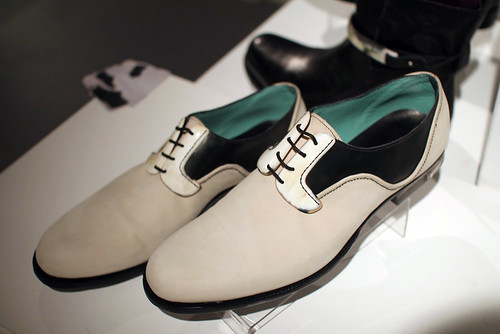
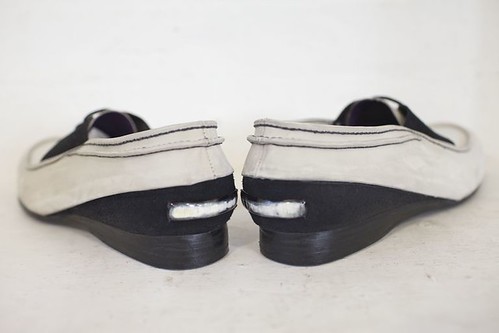
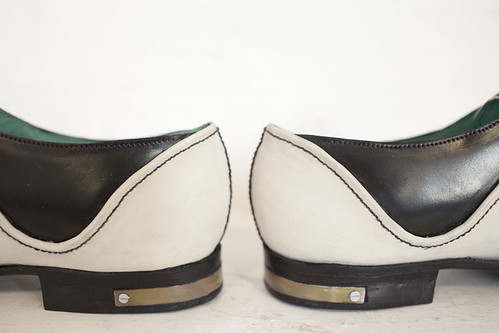
Boat Shoe. Nubuck and rough suede upper, concealed wedge and horn strip heel. Image by Tim Medley

SS: The collection challenges traditional gender roles within craft practice by combining inherently feminine crafts with men's bespoke footwear. Was this the driving inspiration behind it?
Michelle Quick: Definitely. I did a lot of knitting, weaving, and embroidery during my BA and when I came to London and started investigating the bespoke shoe shops here, I realised that a lot of crafts are still very gender specific. I wrote my thesis on the origins of gender roles in different crafts and how they can still hold true today. Obviously there are men who knit and women who make shoes or do wood-working, but there is still usually a dominant gender. For my final collection, I wanted to combine various crafts and make objects that feel somewhat neutral.

Stitch Oxford. Image by Tim Medley

SS: The collection features intricate stitching, various welting techniques and utilises cow horn as a structural and decorative element but how would you describe the collection in your own words?
Michelle Quick: For me, the collection is about balancing masculine and feminine characteristics - I used contrasting textures and style lines to establish that dialogue. I also wanted to creating something that felt modern and fresh even though I was using traditional craft techniques. Even though the designs are rooted in my concept and body of research, it was still about making shoes that people would desire and want to wear.

Boat Shoe with horn strip on the heel. Image by Tim Medley

SS: Could you talk us through a few of the main processes involved?
Michelle Quick: Hand-stitching onto leather was a new thing for me, it's very different than fabric because you can't make a mistake the same way you can with fabric because the hole from the needle is permanent. I had to measure and mark out all the stitch marks and really take my time with it. It changed the way I had to assemble the shoes.

Most of the shoes are hand welted. After the upper is lasted, you hand stitch a strip of leather (the welt) to the upper and through the insole - this stitching is hidden. You then stick the sole on and stitch through the welt and the sole - this is the stitching that is exposed around the shoe. It's an incredibly laborious process, you have to twist and wax your own thread and taper the ends so they can be attached seamlessly to flexible needles. You are stitching through very thick soling leather and have to make a hole first with an awl - my wrists were in a lot of pain for a while.

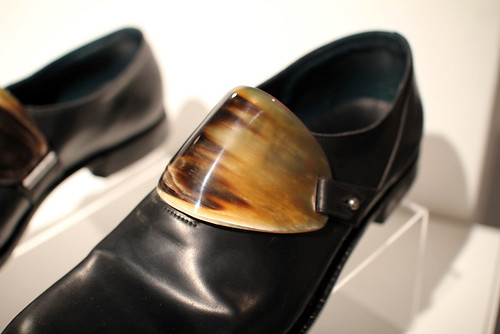
Horn quarter piece on the Monk Shoe

SS: Cow horn is one of the most prominent decorative and structural components in your collection. What attracted you to this material?
Michelle Quick: I've always been fascinated with horn objects, I love seeing old horn combs and caviar spoons in museums. The colours are so varied and you can polish it to such a high shine. It's a material that is present in all bespoke shoe houses (shoe horns, brushes, etc) but is rarely used on the shoes themselves. I was interested in how it could be used to adorn shoes in a new way.

It was difficult to figure out how to work the horn. There are very few resources online or in books and almost no companies still working with it. My initial research was quite frustrating. I was very fortunate to come across Abbeyhorn, the last remaining horn-workers in the UK (see below). After getting guidance from them, I was able to come back to my studio and experiment and figure out the process that worked for me. It does smell pretty bad (like burnt hair) when you are sanding and heating it, so my course-mates were never very happy with that.

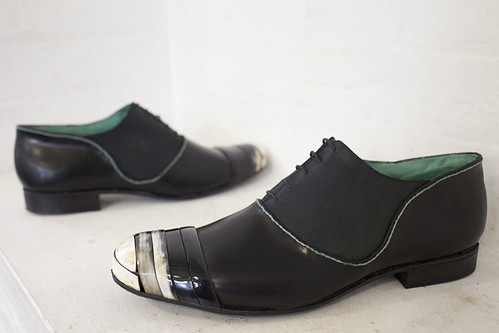
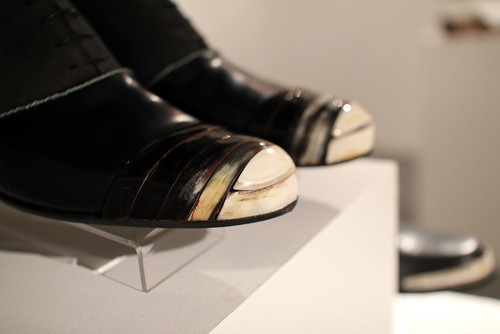
The cowhorn toe cap on the Dress Oxford. Image by Tim Medley

SS: How difficult was it to work with?
Michelle Quick: It's an unpredictable material, each horn is unique in it's colouring, it also has areas that are more dense so it doesn't always heat evenly and you end up with kinks when you mould it. I was obviously making pairs so if one piece didn't work out I generally had to redo both to make them match. It took me a while to get comfortable and figure out the best way to do things.

A closer look at the horn toe cap. Strips of horn have been sanded together.

SS: All of your products are, of course, handmade and feature intricate detailing. How long did each pair take to make?
Michelle Quick: All of the shoes had different areas that took more time than others, some have a lot of hand-stitching while others only a hint, some have a traditional welted sole and others a cemented sole, etc. I calculated that they all took between 30-60 hours each, depending on the level of difficulty. That is from patterning to finished product, but doesn't account for the few months when I was experimenting and prototyping.

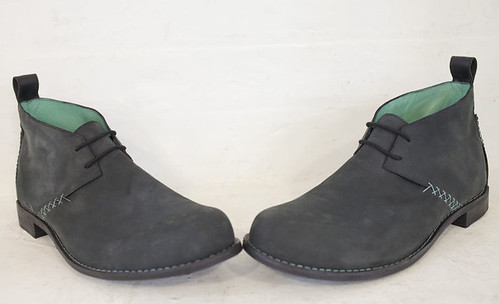
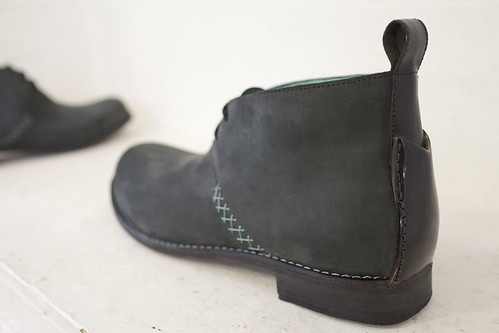
Desert boot in Nubuck and rough cut suede upper. Image by Tim Medley.

SS: In Abbeyhorn and Metropolitan Leather, you worked alongside some great craftsman, how did you find them and how receptive were they to your designs and what did they make of the collection?
Michelle Quick: The people I worked with were so amazing. I've found that if you are genuinely interested in someone's craft, they are more than willing to help you out or give you advice.

The quality of the veg tan leather at Metropolitan is incredible and the colourist Stuart can just look at the swatch you've brought in and mix up dye that's a perfect match instantly. They custom dyed all of my linings to match the threads and I also got soling leather from them.

Abbeyhorn was a great resource for me. They make mostly traditional horn objects and don't deviate from their catalogue too much, so I think they were happy to help me try and use the horn in a new way. I didn't understand the limitations of the material at first, so my ideas were a bit far fetched but the owner Paul helped show me what was possible and how it could be achieved.

I was also advised on my welting and other shoe making aspects by Carreducker. Welting is something you need to learn directly from a person (like most crafts), I had tried to teach myself from books but it was all the little nuances that James and Deborah taught me that allowed me to make shoes to the quality that I have.
I've had nothing but good feedback and support from everyone I've worked with, I feel lucky to have established relations with these companies.

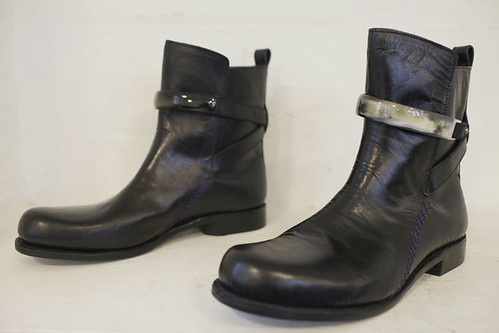
Jodhpur boot with horn and leather strap. Image by Tim Medley

SS: I know this is a difficult question but is there anything that you're most proud of?
Michelle Quick: I'd have to say I'm most proud of how much my skills have developed throughout this course. I feel that my design skills are much stronger and that the quality and speed of my shoe making has greatly improved. It's hard to believe that the course was only a year and a half because it feels like so much has changed.

SS: What advice would you give a prospective footwear design student?
Michelle Quick: I think that learning the making process can only make you stronger as a designer, the more you understand about the product, the more you can experiment and push the actual design.

A closer look at the handstitched upper with raw edge and Herringbone stitch on the Desert Boot. Image by Tim Medley

SS: Finally, what would you like to achieve in 2011 and beyond?
Michelle Quick: My dream is to find a job where I can have a balance between designing and making. The craft side is so important to me, but I don't necessarily need to be making shoes in a workshop all day. Equally, I wouldn't like just churning out designs that I didn't have a tactile hand in somehow. It's all up in the air right now, I want to stay in London for a while and I would like to continue with men's footwear. I think it will be important to work for established companies before trying to pursue anything on my own. Hopefully only good things are to come.

The stacked leather heel on the Derby. Image by Tim Medley.

If the above leaves you desperate for more, I happily point you in the direction of Michelle Quick's informative tumblr. There can be little doubt that this was a labour of love and the results surely make the hard graft worthwhile. The graduate ultimately showcases a real and exciting passion for shoe making. Each design is close to bursting point with meaningful details but nothing feels superfluous or unnecessary. There is a real balance between them. The diverse details combine to create shoes to truly covet. The real surprising element for me is that each shoe exudes a well crafted quality that is most rare to find in a graduate collection. I for one am excited to see what Quick does next but one thing is for sure, my feet will hopefully be treated to a pair one day soon.

Saturday, January 15, 2011

A year on with... Sarah Williams


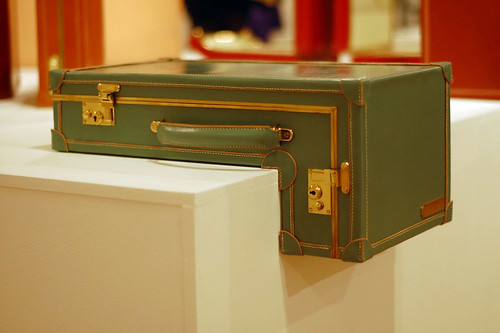
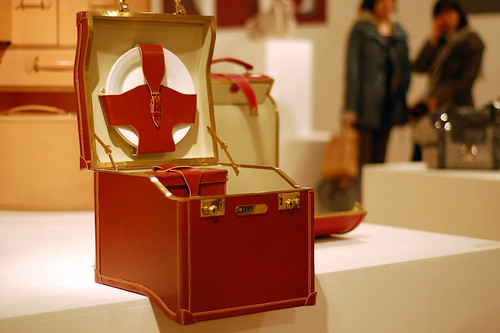
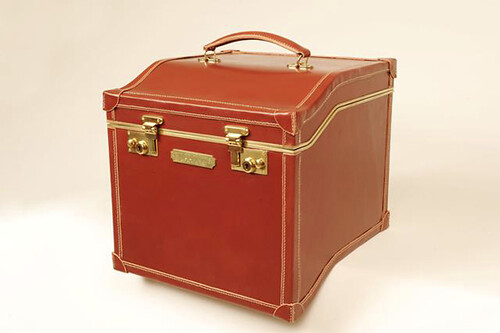
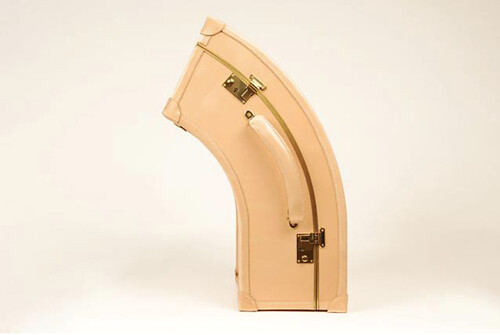
As we excitedly edge closer to LCF's MA_11 festival, I'm still left wondering has it really been twelve months since I was first introduced to the talents of the 2010 crop. As you might recall, I was utterly blown away by the menswear design talent on show. From the nineteen students who were showcased in the 2010 show, it was the menswear that really shone through and I covered their collections in some detail in the subsequent months. This series of features began with Sarah Williams and her mind bending luxurious luggage.

Now, if I have found the last twelve months a little fast, Williams must have experienced something of a whirlwind of success. Since completing her MA in Fashion Artefact, Williams went on to set up her own label, Williams Handmade and has won two hugely prestigious awards at International Talent Support (ITS) for Accessory Collection of the Year and the Absolut Vodka award for accessories, and has taken part in LFW as part of Fashion East's menswear installations. In addition to developing her next collection which will be shown at ITS Ten, she is curently working with British leathergoods brand, Daines and Hathaway. By any standards this has been a hugely inspiring year for the next crop of MA graduates.

Williams has previously described that "Completing the MA Fashion Artefact course at LCF was one of the most challenging and rewarding that I have ever done. It provided me with a geat platform to launch my career from." Before we enthusiastically greet the crop of 2011, we just had to learn more about Williams' year and to secure her advice for future students,,,


SS: The last twelve months must have been something of a whirlwind as it is has seen you graduate, receive plaudits and awards around the globe, work with one of England's luxurious leather goods companies, presented at LFW and found the time to work on a new collection. Have I missed anything? Describe the last twelve months in your own words..
Sarah Williams: I think you managed to sum it all up there. It sounds a bit overwhelming when its all written down. It has been an extremely exciting and busy year. I have learnt so much from being thrust into the "real" world, after the bubble of university. I have also met a lot of really interesting and influential people and have been so humbled by everyone's comment and willingness to help me.


SS: Looking back over your year, ITS must be one of the real standout moments. In July you were invited to Trieste for the ninth year if ITS. Supported by Diesel, the design competition brings young fashion hopefuls together. Congratulations on picking up the Absolut award as well as the ITS Accessories collection of the year award. What can you tell us about the experience? What effect has the award had on Williams-Handmade?
Sarah Williams: ITS literall was one of the best weeks of my life. The whole experience from the moment we got off the plane, everyone from the organisers of ITS, the judges and all of the other finalists were so helpful, friendly and supportive. It was a great chance do some networking and meet many people which I would not have had chance to otherwise. Winning the award has a had a massive impact on Williams Handmade. Without the prize money it would have been very diffcult to be able to fund my new collection, so it has been really vital. I can not wait to go back to Trieste and present my new collection, although I am a bit nervous about how it will be received.


SS: You hoped to use craft to produce something which has never been seen before and to challenge the fashion industry's view on craftsmanship and how it can be used to produce something completely original. Have you been surprised by the reaction? How happy are you that you've accomplished these aims?
Sarah Williams: I was completely overwhelmed by the postive reaction that the collection received. I never expected to receive so much positive press. I am happy that most reports of the collection back up and suppport my views, whether I have actually made a change, I am not sure about that yet, I think there is still a lot to be done.

SS: Now, as part of your prize, you will be presenting your new collection at ITS Ten. At this early and secretive stage, what can you tell us about the collection?
Sarah Williams: The only think I can say is that my values have remained the same, but this time I have taken inspiration from an icon who shares these values. The rest is, I'm afraid is "top secret".


SS: Craftsmanship was the starting point to your concept and it is what the collection is based upon, but it developed to involve many other issues. In our previous interview, you mentioned the challenging the differences between the artisan and the artist, between design and fashion. Has your altered? Have you encountered any new challenges?
Sarah Williams: I suppose I have now seen both sides as I have produced bespoke artisan pieces for private orders and I have also worked as a designer at Daines and Hathaway. I hope with my new collection, that although I want to carry on with the bespoke more original items, to also produce some items which although made with a high level of craftsmanship are still affordable. As far as I can see the only problem (if it is one) with bespoke hand crafted items is that they inevitably become very expensive, and therefore elitist. I hope to overcome this with my new collection, whether I will achieve this I don't know yet.


SS: What would you like to achieve in 2011 and beyond?
Sarah Williams: Following launching my new collection at ITS, I would like to be able to show at LFW again and to get Williams Handmade products stocked in stores. As such I would like to go into some type of hand crafted production. I would also like to see a successful new collection for Daines and Hathaway where I am working.

SS:Finally, what advice would give the next crop of talented LCF MA graduates?
Sarah Williams: Enjoy the next year ahead of you.

Wednesday, July 21, 2010

LCF BA Graduate Showcase: Makoto Taguchi

The footwear design craft of Makoto Taguchi

Over the last few months we have been treated to an array of graduate design talent from this years crop. I have shared my highlights throughout and there is more than enough time to showcase another. At the beginning of the month I shared the talents of Minako Tsuda whose playful leather schoolboy rucksacks and gentlemanly document holders harked back to a different, altogether more romantic sartorial era. Tsuda was of the LCF BA Footwear, Accessories and Clothing students graduates on show at the pop up gallery space on Carnaby Street that left me inspired. Makoto Taguchi was the other and I can now excitedly share images from his intriguing footwear collection. I was taken by this Cordwainers Footwear graduate's talent at combining various shoe making techniques, from traditional hand sewn methods to modern glued shoes, with the introduction of his own, fresh ideas. Taguchi's design philosophy is simplicity after complicated process. The best way for me to demonstrate this to you is to show you his collection in some detail...

I'll begin with my own personal favourite. Taguchi's Derby, removable boot.

A closer look at the Derby boot from all angles.

Transforming the boot in to a shoe with the help of beautiful leather lace work.

I love the sense of well crafted quality that exude from this pair.

Taguchi's second design. Classic plus whole cut.

Once again the boot transforms...

I love the combination of the contrasting leather and wood sole.

Ornament, Structure, Button. This boot seemingly has it all.

A close up at a few of the key details.

Ornament, Structure, Ski hook. This is certainly Taguchi's most adventurous design but once again there is a real balance.

A closer look, ski hook and all.

The last design is simply titled, Cut.
A look at a few of the processes involved.

A closer look at the shoe's profile.

Makoto Taguchi's graduate collection displays an array of techniques, traditional and otherwise. The graduate ultimately showcases a real and exciting passion for shoe making. Each design is close to bursting point with meaningful details but nothing feels superfluous. There is a real balance between them. The diverse details combine to create shoes to covet. The real surprising element for me is that each shoe exudes a well crafted quality that is most rare to find in a graduate collection. I for one am excited to see what Taguchi does next but one thing is for sure, my feet will no doubt be treated to a pair one day soon.

Monday, July 5, 2010

LCF BA Graduate Showcase: Minako Tsuda

LCF Graduate Minako Tsuda's gentlemanly bundle of braces and bow ties.

Back in March, the London College of Fashion unveiled a 'pop up' gallery space on Carnaby Street to help showcase its graduate work. So far the space has played host to a rolling programme of exhibitions and events and will continue to do just that throughout the summer. From footwear to illustration, photography to clothing and accessories the space is transformed to present new work every few weeks. This weekend I ventured down to the space to examine and marvel at the static showcase of the college's BA Footwear, Accessories and Clothing students. In the basement space I soon came across the work of Minako Tsuda. Tsuda's playful leather schoolboy rucksacks and gentlemanly document holders which hark back to a different, altogether more romantic sartorial era.

A look at Tsuda's inspirations.

The exhibition space provided the opportunity to flick through each students portfolio and I spent quite some time at Minako Tsuda's as it was a visual treat. Tsuda's graduation collection was inspired by 1930s to 1950s classic British men's shoes and the men wearing them. Inspiration came from everything from the shape of the heels to design details including hooks with strings and the seams of a cricket ball. As a result the collection whimsically looks back at ol' England. Even when times were tough there were a good number of men who loved dressing well and looking good.

Tsuda's decidedly English inspirations

As I longingly stroked Tsudo's leather creations in the basement of the exhibition space I was instantly transported back in time, surrounded by a gathering of preppy dandies from the mid twentieth century. If this is difficult for you to imagine, the graduate has thankfully shot a look book that mirrors the association of my mind quite wonderfully...


It is clear that Tsudo has a passion to create accessories that are playful and quirky, not very serious, just like her own personality. The talented graduate believes that all of her found and imagined characters appear in her finished designs. She loves to see people smile with her designs and prescribes to the belief that dressing each morning should not be a chore or a bore. I for one agree and certainly had a smile of my face as I stroked her designs.